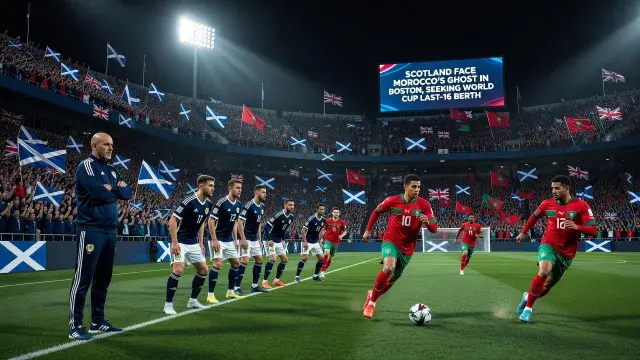
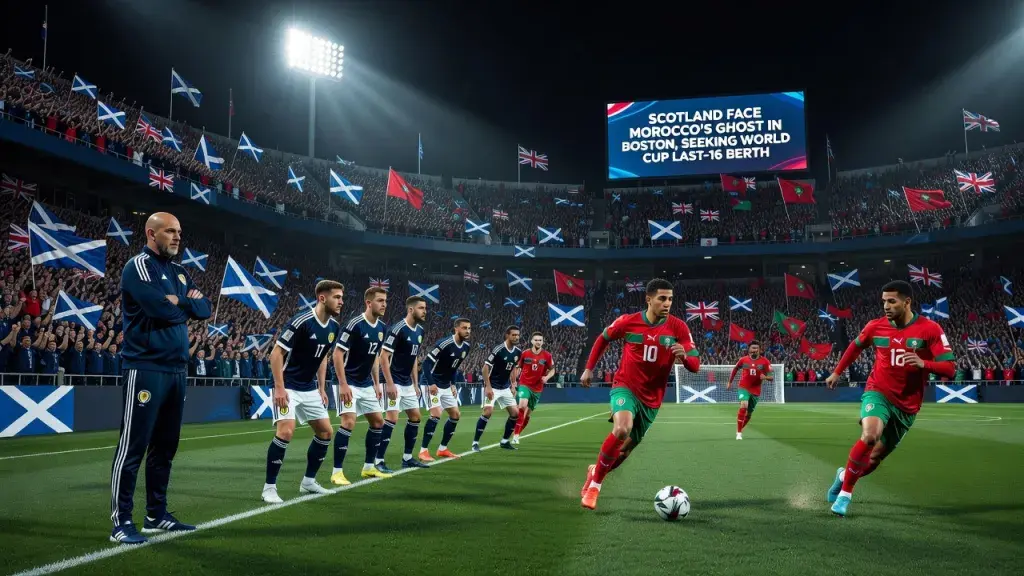
Scotland's first World Cup win in 28 years - a hard-fought victory over Haiti - has given Steve Clarke's side something to build on, but the work is only beginning. Friday night's Group fixture in Boston against Morocco is a considerably steeper climb, pitting the Tartan Army against a side that has grown into one of world football's most formidable outfits since the last time these two nations shared a World Cup pitch.
That previous meeting, at France 1998, ended 3-0 to Morocco and proved to be Scotland's last World Cup game for nearly three decades. The memory is raw enough that few in the Scotland camp will need reminding of what is at stake. While fans of other sports are finding plenty to occupy themselves at this tournament - from athletics to beach volleyball live odds - Clarke's squad has singular focus: avoid repeating history and take a significant step towards the knockout rounds.
Morocco arrive in Boston on the back of a genuinely impressive display against Brazil. They led the five-time world champions at one stage and, for a substantial spell, caused Dorival Júnior's side real problems with their pace and organisation. A draw against Brazil - a result many outside the African continent quietly expected Morocco to lose heavily - has set the Atlas Lions up perfectly in this group and only adds to the pressure bearing down on Scotland.
Champions in Controversy - Morocco's AFCON Title Explained
Morocco head into this fixture as the reigning Africa Cup of Nations champions, though the manner in which that title arrived remains a live debate across the continent. The final against Senegal was goalless deep into stoppage time when VAR awarded Morocco a penalty, prompting Senegal coach Pape Thiaw to lead his players off the pitch in protest. After a 16-minute standoff, the Teranga Lions returned. Brahim Diaz stepped up for Morocco - and saw his spot-kick saved. Senegal's Pape Gueye then scored the decisive goal in extra-time, and Senegal left believing the trophy was theirs.
Two months later, the Confederation of African Football stripped Senegal of the title and awarded it to Morocco, citing the protest walkout as a breach of regulations. Senegal had already paraded the trophy publicly before a friendly against Peru, making the reversal all the more charged. Whether Morocco are widely regarded across Africa as the true champions is doubtful - but officially, the title belongs to them, and it underlines the seriousness of the side Clarke's men will face on Friday.
Qatar 2022 Was No Fluke - Morocco's Rise Is Sustained
Scotland must also contend with the broader context of what Morocco have become. At Qatar 2022, they became the first African nation to reach a World Cup semi-final, eliminating Belgium, Spain and Portugal along the way before losing 2-0 to eventual champions France. That was not a tournament aberration - it was confirmation of a trajectory that had been building for years and has continued since.
The Morocco of 2026 is stronger, deeper and more experienced than the side that beat Scotland by three goals in Saint-Étienne all those years ago. They carry genuine tournament pedigree, a settled squad of European-based professionals, and a fanbase that travels in extraordinary numbers and volume. Scotland should expect to be playing in a hostile atmosphere despite this nominally being a neutral venue.
Pace, Pressure and the Players Clarke Must Stop
Tactically, Scotland face a specific challenge. Morocco's default mode is high-intensity, forward-pressing football played at pace through wide areas, and the expectation is that they will look to dominate the ball and territory from the first whistle. Against Brazil, they came out with no sign of nerves, pressing aggressively and exploiting space in behind with real purpose. Their intensity did drop in the latter stages of that game, and Clarke's coaching staff will have noted that carefully.
The key for Scotland may be survival in the opening quarter. If they can stay compact, limit Morocco's rhythm and avoid an early goal, the opportunity to strike on the counter becomes real - but Clarke's forwards will need to be clinical if those moments arrive, because they may not come often.
Two players in particular warrant close attention. Ayyoub Bouaddi, the 18-year-old Lille midfielder who impressed against Brazil, is already being linked with major Premier League clubs and carries the kind of energy and technical ability that can unpick deep defensive blocks. Winger Saibari, who got on the scoresheet against Brazil, is another direct and dangerous threat down the flanks. Scotland's fullbacks will have a long evening ahead of them.
The Stakes Are Clear - And They Favour Morocco
Morocco's path through this group looks relatively comfortable. They have already played what most would consider their most difficult fixture, came through unbeaten, and face Haiti in their final game. From their perspective, Scotland represent a winnable match and three points that would effectively wrap up qualification before the last round of fixtures.
Scotland's situation is more precarious. A point on Friday would go a long way towards securing a knockout-stage place; a defeat would leave Clarke's side needing a result against Brazil to advance. Given what Brazil represent - even a Brazil side that was troubled by Morocco - that is not a prospect any Scotland supporter will relish. The Tartan Army know what Friday night means. So does Steve Clarke. The question is whether his players can carry the weight of 28 years of absence and turn a ghost from the past into a stepping stone forward.